
How to Support an Anxious Child or Teen in Cheltenham: Parent Support and CBT Options
If you are searching for support for anxious child Cheltenham, you are probably trying to answer a difficult question: is this a passing worry, or does my child need more structured help?
Many children and teenagers feel anxious at times. Tests, friendships, family changes, sport, social situations and sleep disruption can all play a part. What often worries parents is not just the anxiety itself, but how quickly it can begin to affect school, home life, confidence and day-to-day routines.
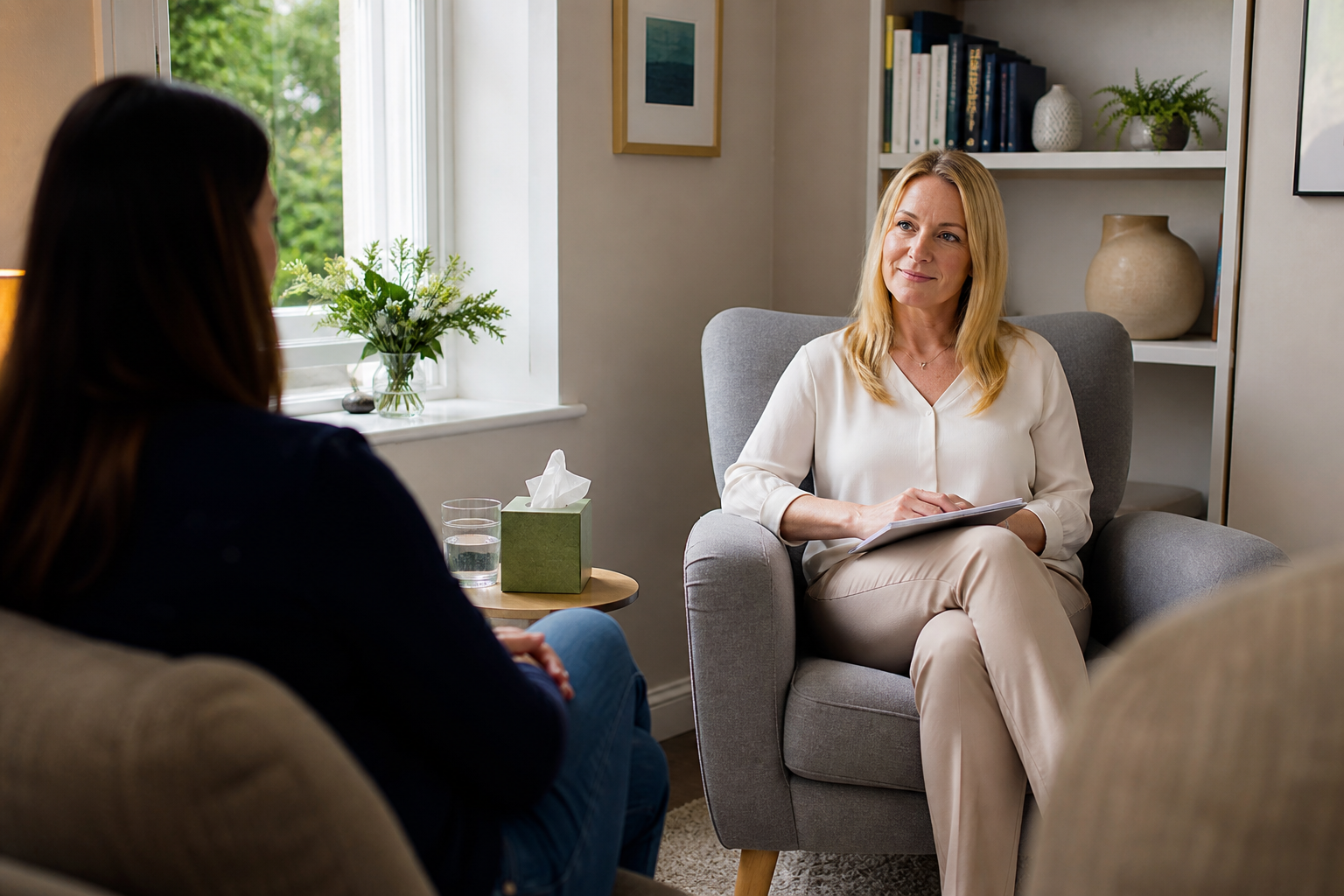
At Cleeve Therapy Group in Bishops Cleeve, near Cheltenham, we work with children and young people aged around 8 to 18, as well as adults and parents supporting anxious children. We provide private counselling and psychotherapy specialising in CBT, with local clinic sessions and online appointments available.
If you are unsure what kind of help would be most appropriate, this guide explains what anxiety can look like in children and teens, what parents can do at home, and when parent support or CBT may be worth exploring.
Support for an anxious child in Cheltenham: where to start
Anxiety does not always look the way people expect. Some young people talk openly about worries. Others seem angry, withdrawn, tearful, physically unwell or reluctant to go places they previously managed.
Common signs of anxiety in children and teenagers
Frequent worry about school, friendships, health, mistakes or what might go wrong
Avoidance of school, clubs, social events, sleepovers or travel
Physical symptoms such as stomach aches, headaches, nausea, shaking or trouble sleeping
Need for repeated reassurance from parents or carers
Irritability or emotional outbursts that seem bigger than the situation
Low confidence or strong self-criticism
Panic symptoms, including racing heart, feeling overwhelmed or fear that something bad will happen
These signs do not always mean a child needs therapy straight away. They do suggest it is worth paying attention to patterns, triggers and how much anxiety is limiting daily life.
Why children and teens do not always say, "I feel anxious"
Younger children often struggle to explain what is happening internally. Teenagers may understand it more clearly but still find it hard to talk, especially if they fear being judged, dismissed or pressured.
That means parents are often responding to behaviour before they fully understand the emotion underneath it. Seeing the behaviour as possible anxiety, rather than simply defiance or overreaction, can change the conversation completely.
What parents can do at home right now
You do not have to wait for everything to get worse before making helpful changes. Small, steady responses at home can reduce pressure and create a calmer starting point.
1. Acknowledge the feeling without escalating it
Try to avoid telling your child there is "nothing to worry about" if they clearly feel distressed. A more helpful approach is to recognise the feeling while staying calm yourself.
You might say: "I can see this feels really hard right now" or "It makes sense that you feel worried".
2. Stay curious about patterns
Notice when anxiety tends to show up. Is it worse on school mornings, before social events, at bedtime or after conflict? Patterns can help you understand what is driving the anxiety and what might be maintaining it.
3. Be careful with reassurance loops
Reassurance can help in the moment, but when it becomes constant it can accidentally keep anxiety going. If a child needs the same answer over and over again, the problem is often no longer lack of information. It is the anxiety seeking certainty.
A steadier response is to acknowledge the worry, remind them of the plan, and help them use coping steps rather than repeatedly debating the fear.
4. Keep routines as consistent as possible
Sleep, meals, transitions and predictable expectations all matter. Anxiety often grows when life feels uncertain or chaotic. Consistent routines can make children and teens feel safer and more able to cope.
5. Focus on manageable steps, not total avoidance
Parents understandably want to reduce distress. The difficulty is that avoiding every trigger can make anxiety stronger over time. When appropriate, gradual steps usually work better than all-or-nothing pressure.
That may mean helping your child face one small part of a feared situation rather than removing the whole challenge immediately.
When anxiety may need extra support
Some anxiety settles with time, reassurance and practical changes. In other situations, extra support is helpful because the problem has become more persistent or more disruptive.
Signs it may be time to seek professional help
Anxiety has been going on for weeks or months with little improvement
Your child is struggling to attend school or manage ordinary daily activities
Worry is causing repeated physical symptoms or sleep disruption
The whole family is adapting around anxiety in ways that feel unsustainable
Your child is becoming increasingly withdrawn, overwhelmed or avoidant
You feel stuck and unsure how to help without making things worse
Parents do not need to wait until things reach crisis point. Often, the earlier a clear and practical approach is put in place, the easier it is to help a young person regain confidence.
If you are worried about immediate safety or a mental health crisis, urgent support should be sought through appropriate emergency or medical services.
How CBT can help an anxious child or teenager
Cognitive Behavioural Therapy is a structured approach that looks at how thoughts, feelings, physical symptoms and behaviours interact. For anxiety, that is important because worry often leads to avoidance, and avoidance can keep the fear going.
With children and young people, CBT is adapted to their age, developmental stage and the issues they are facing. The aim is not to force them to "just get on with it". It is to help them understand what is happening and learn practical ways to respond differently.
What CBT for anxiety often focuses on
Understanding the anxiety cycle
Identifying triggers and patterns
Learning calmer and more balanced ways to respond to worried thoughts
Building coping tools for physical anxiety symptoms
Reducing avoidance through manageable steps
Improving confidence and resilience over time
For teenagers, CBT can be especially helpful when they want a practical framework rather than vague advice. For younger children, therapy may involve simpler language, visual tools and close parent involvement where appropriate.
Where parent support fits in
Sometimes the best starting point is direct therapy for the young person. Sometimes it is parent support first.
Parent support can help when:
Your child is anxious but not ready to engage in therapy yet
You want clearer strategies for responding at home
You are caught in patterns of conflict, avoidance or reassurance-seeking
You need help deciding what next step is most appropriate
This can be a very constructive route because parents often play a key role in how anxiety is managed day to day. When the adults around a child feel more confident and consistent, the young person often feels safer too.
Parent support and therapy options at Cleeve Therapy Group
At Cleeve Therapy Group, we provide private counselling and psychotherapy specialising in CBT from Bishops Cleeve, Cheltenham. We work with children and young people aged around 8 to 18, adults, and parents supporting anxious children.
Support is available through local clinic sessions and online therapy appointments, so families can choose the format that fits best. We also run group programmes alongside individual therapy.
If you are looking for parent support because your child is struggling with worry, panic, avoidance or confidence, we can help you think through the options in a practical and straightforward way.
If your child or teenager may benefit from a more structured approach, you can also explore CBT therapy appointments with us. Enquiries are welcomed by phone and via online booking for an initial 15-minute assessment.
Choosing the right next step for your family
Not every anxious child needs the same type of support. A good next step depends on the young person's age, the severity of the anxiety, how long it has been going on and whether they are ready to engage directly.
Parent support may be a good fit if
You want guidance on how to respond more effectively at home
Your child is reluctant to attend therapy at the moment
You need help understanding whether behaviours are anxiety-driven
You want a clearer plan before deciding on therapy
Therapy for your child or teen may be a good fit if
Anxiety is affecting school, friendships, sleep or everyday functioning
Your child is asking for help or seems open to support
They are stuck in avoidance patterns that are becoming more entrenched
You want a structured approach such as CBT
Online sessions can be helpful if
Travel or scheduling makes clinic appointments harder to manage
Your teenager feels more comfortable starting from home
You want more flexibility around family routines
The key is not to wait for certainty before acting. Many parents reach out because they know something is not quite right, even if they cannot yet name it clearly. That is often enough reason to start a conversation.
Frequently asked questions
How do I know if my child needs therapy for anxiety?
If anxiety is persistent, getting in the way of school, sleep, friendships or home life, or causing a lot of distress, it is worth seeking professional advice. You do not need to wait until things feel severe.
Is CBT suitable for teenagers with anxiety?
CBT can be a helpful option for many teenagers because it is practical and structured. It focuses on understanding anxiety patterns and building realistic coping strategies step by step.
Can I get parent support even if my child is not ready for therapy?
Yes. Parent support can be a useful starting point when a child or teen is reluctant to engage, or when you want clearer strategies before deciding on direct therapy.
Do you offer online therapy for children and young people?
Yes. Cleeve Therapy Group offers online sessions as well as local clinic appointments, giving families more flexibility in how support is accessed.
Final thoughts
Supporting an anxious child or teenager can feel emotionally exhausting, especially when you are trying to be calm, helpful and consistent while also worrying about what comes next. The good news is that anxiety can be understood, and there are practical ways to respond.
If you are looking for support in Cheltenham, our team at Cleeve Therapy Group can help you explore whether parent support, therapy for your child or teenager, or online sessions may be the right fit. To take the next step, visit Cleeve Therapy Group to make an enquiry or arrange an initial 15-minute assessment.

Comments